Yard planning guide
Deer-Resistant Plants by USDA Zone
A horticulturist's deer-resistant plant list by USDA zone, using Rutgers deer-damage ratings, with sun, bloom, and the honest limits of 'deer-proof'.
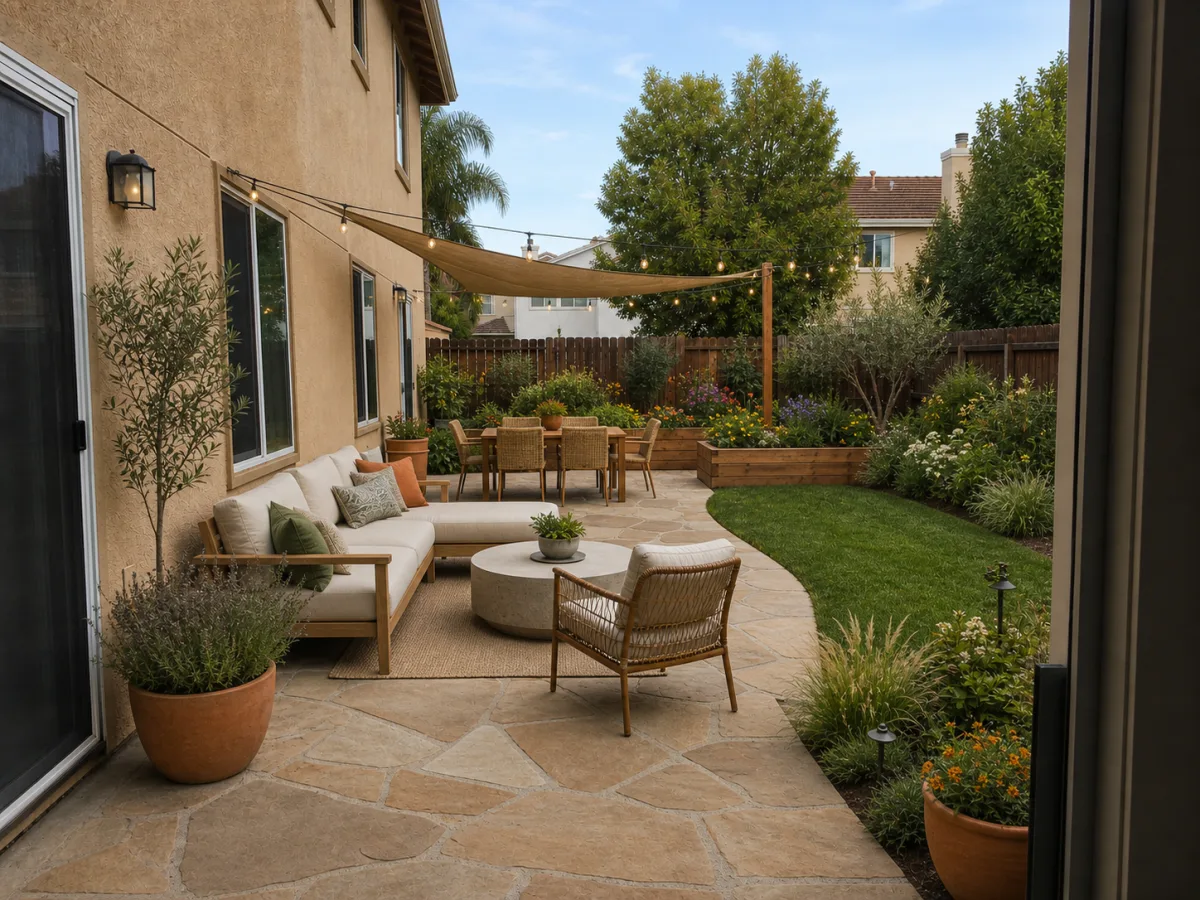
The honest short answer: no plant is truly deer-proof, but you can build a yard deer mostly walk past by choosing species deer dislike — aromatic herbs, fuzzy or fern-like foliage, toxic plants, and tough ornamental grasses — all matched to your USDA hardiness zone so they survive winter and return on their own. The most reliable way to pick is to use a published deer-damage rating, like the Rutgers “Landscape Plants Rated by Deer Resistance” list, and stay in the “Rarely Damaged” and “Seldom Severely Damaged” tiers if deer pressure on your street is heavy. Plant those, group the smelliest ones along the paths deer use to enter, and protect everything for the first season while it establishes. For the broader plan of how these beds fit your whole space, see our AI garden design overview.
This page is about the plants and the ratings themselves — which species deer reliably skip, the zones where they thrive, and exactly where “deer-resistant” quietly fails. If you want to test how a deer-resistant bed looks before buying anything, you can preview layouts with AI Yard Planner, but the plant knowledge below stands on its own.
How “deer-resistant” is actually measured
“Deer-resistant” is not a marketing label — there are real, field-based ratings behind the good ones. The most widely cited is the Rutgers New Jersey Agricultural Experiment Station deer-resistance list, which sorts hundreds of landscape plants into four tiers based on decades of observed browsing:
- Rarely Damaged — deer leave these alone except in true starvation conditions. This is your safest tier under heavy pressure.
- Seldom Severely Damaged — occasionally nibbled but rarely ruined; reliable in most yards.
- Occasionally Severely Damaged — fine where deer pressure is light, risky where it is heavy.
- Frequently Severely Damaged — deer candy (hostas, tulips, daylilies, arborvitae, yews). Avoid these unless fenced.
The single most useful habit is to match the rating tier to your local pressure. A suburban lot backing onto woods with a visible deer trail needs “Rarely Damaged” plants almost exclusively. A yard in a denser neighborhood where deer pass through occasionally can use the “Seldom” and even “Occasionally” tiers with good results. The rating tells you the risk, your site tells you how much risk you can afford.
Why deer skip certain plants
Four traits predict resistance, and you can read them off a plant before you ever check a list:
- Strong aroma. Deer browse by smell. Pungent herbs and silver-leaved Mediterranean plants — lavender, sage, Russian sage, catmint, rosemary, thyme — confuse and deter them.
- Fuzzy, hairy, or leathery leaves. Deer dislike the texture. Lamb’s ear, lady’s mantle, and many ferns are passed over for this reason.
- Toxic or bitter compounds. Plants like daffodils, foxglove, and boxwood contain compounds deer avoid (these are often toxic to deer and pets alike — site them away from where animals graze).
- Tough, grassy, or spiny structure. Ornamental grasses, barberry, and prickly shrubs are unappealing to browse.
A bed built mostly from these four traits is what “deer-resistant landscaping” really means. The opposite — soft, sweet, smooth-leaved plants like hostas and daylilies — is exactly what gets eaten to the ground overnight.
Deer-resistant plants by USDA zone
Below are reliable performers grouped by type, with botanical names, the rough USDA zones where they thrive, sun needs, and their general Rutgers-style resistance tier. Always confirm your zone first on the official USDA Plant Hardiness Zone Map, and treat resistance as “strong tendency,” not a guarantee — see the failure section below.
| Plant | Type | USDA zones | Sun | Resistance tier |
|---|---|---|---|---|
| Lavender (Lavandula angustifolia) | Perennial herb | 5–9 | Full sun | Rarely damaged |
| Catmint (Nepeta spp.) | Perennial | 3–8 | Full sun | Rarely damaged |
| Russian sage (Perovskia atriplicifolia) | Perennial | 4–9 | Full sun | Rarely damaged |
| Yarrow (Achillea millefolium) | Perennial | 3–9 | Full sun | Seldom damaged |
| Bee balm (Monarda spp.) | Perennial | 4–9 | Full–part sun | Seldom damaged |
| Lamb’s ear (Stachys byzantina) | Groundcover | 4–8 | Full sun | Rarely damaged |
| Daffodil (Narcissus spp.) | Bulb | 3–8 | Full–part sun | Rarely damaged |
| Foxglove (Digitalis purpurea) | Biennial | 4–8 | Part shade | Rarely damaged |
| Bleeding heart (Dicentra spp.) | Perennial | 3–9 | Shade | Seldom damaged |
| Ferns (e.g. Dryopteris, Polystichum) | Foliage | 3–9 | Shade | Rarely damaged |
| Boxwood (Buxus spp.) | Evergreen shrub | 5–9 | Full–part sun | Rarely damaged |
| Barberry (Berberis thunbergii)* | Shrub | 4–8 | Full sun | Rarely damaged |
| Spirea (Spiraea spp.) | Shrub | 4–8 | Full sun | Seldom damaged |
| Juniper (Juniperus spp.) | Evergreen | 3–9 | Full sun | Seldom damaged |
| Switchgrass (Panicum virgatum) | Ornamental grass | 4–9 | Full sun | Rarely damaged |
| Little bluestem (Schizachyrium scoparium) | Ornamental grass | 3–9 | Full sun | Rarely damaged |
* Caution: Japanese barberry (Berberis thunbergii) is invasive and banned or restricted in several states. Check your state’s invasive-plant list and choose a native or sterile cultivar where it is restricted.
A few patterns to read off this table. The most bulletproof choices cluster in the aromatic-perennial and ornamental-grass rows — they are both deer-resistant and low-maintenance once established, which is why they show up on our low-maintenance backyard landscaping list too. For shade, your deer-resistant palette narrows to ferns, bleeding heart, and foxglove, so don’t expect a shady deer-resistant bed to be as colorful as a sunny one. And bulbs are a quiet win: daffodils are both deer- and rodent-resistant, so they are a far safer spring bulb than the tulips deer treat as a salad bar.
How to lay out a deer-resistant yard
Resistant plants do better when the layout works with them, not against them.
- Build a fragrant front line. Deer enter from the same routes — a wood edge, a gap in fencing, a neighbor’s yard. Plant the most aromatic species (lavender, catmint, Russian sage, sage) along those entry points so the first thing a deer smells is something it wants to avoid.
- Protect the high-value plants in the middle. If you grow anything deer like (a vegetable patch, roses, hostas), put it in the center of resistant plantings or behind a fence, never at the perimeter.
- Mix textures and aromas. Deer adapt to a single repellent over time. A varied bed of smelly, fuzzy, and toxic plants gives them no easy gap.
- Use plants as a living screen. Tall ornamental grasses and dense, prickly shrubs like barberry or juniper double as a visual and physical deterrent along boundaries.
The same plant-and-placement logic scales up to a whole property layout — our AI backyard design guide covers how planting fits with patios, paths, and privacy.
Repellents and fencing vs. plant choice
Plant choice is the foundation, but it is one of three tools. Here is how they compare.
| Approach | Up-front effort | Ongoing effort | Reliability under heavy pressure | Best for |
|---|---|---|---|---|
| Resistant plants only | Low (one planting) | Very low | Medium — deer still sample | Light–moderate pressure |
| Repellent sprays | Low | High — reapply after rain, rotate scents | Medium — deer habituate | New plantings, vegetable patches |
| Physical fencing | High (8 ft for deer) | Low once built | High — the only near-certain method | High pressure, prized plants |
The realistic strategy for most yards is resistant plants as the base, a fence only around what you truly can’t lose (vegetables, young trees), and repellent spray as a temporary bridge while new plants establish. Repellents work but demand discipline — they wash off in rain and lose effect as deer get used to a scent, so rotate between an egg-based and a predator-scent product rather than relying on one. A fence is the only method that approaches certainty, and for deer it has to be tall: deer clear short fences easily, so an effective deer fence is around 8 feet, or a wide double fence that defeats their depth perception. The Penn State Extension deer-fencing guidance covers the height and design specifics.
When deer-resistant plants fail
This is the part the plant tags leave out. “Deer-resistant” describes a tendency under normal conditions, and several situations break it:
- Hungry deer eat almost anything. In late winter, drought, or a hard winter when natural forage is gone, deer will browse plants they normally ignore — including “rarely damaged” species. No list survives true starvation pressure.
- New plantings are tender and tempting. The soft, well-fertilized growth on a freshly planted nursery shrub is more palatable than the same plant after a season of toughening. Protect new plants even if the species is resistant; this is the single most common reason a “deer-proof” bed gets browsed.
- Regional taste varies. Deer browsing differs by region and even by local herd habit. A plant rated resistant in New Jersey may be eaten in your county. Treat any national list as a starting point and watch your own yard.
- Resistance is not the same as deer-proof. Even the best plants get sampled — a bite taken and spat out. If zero damage is the goal, only a fence delivers it.
- Pressure changes over time. A development clearing nearby woods can push a herd into yards that were fine for years. Resistance that worked may need topping up with repellent or fencing.
Plan around these and a deer-resistant design holds up for years. Ignore them — especially the establishment protection — and you’ll conclude, wrongly, that the plants “didn’t work.”
Putting it together
A dependable deer-resistant yard usually looks like this: aromatic perennials and ornamental grasses across the sunny areas, ferns and bleeding heart in the shade, daffodils instead of tulips for spring, the smelliest plants massed along the routes deer use to enter, a fence only around the vegetable patch or a prized young tree, and temporary repellent on anything planted this season. That front-loads the thinking once and then mostly looks after itself.
Two more guides help you execute: read how to photograph your yard for AI landscape design so any layout you plan reflects your real sun and site conditions, and our low-maintenance backyard landscaping ideas for how these same species keep overall upkeep low.
One honest caveat: any layout you generate from a photo — including with AI Yard Planner — is a visual concept, not a planting guarantee or a construction document. Confirm each plant’s hardiness in your exact zone, its sun and drainage needs, and your local deer pressure before you buy. Software is great for picturing the result; your own yard has the final say. For the wider strategy that ties plants, layout, and beds together, return to our AI garden design overview.
FAQ
What is the most deer-resistant plant I can rely on?
There is no single deer-proof plant, but the most reliable choices are strongly aromatic perennials like lavender, catmint, and Russian sage, plus ornamental grasses such as switchgrass and little bluestem. These rate “rarely damaged” on the Rutgers list because deer dislike both their scent and texture. Even so, “rarely damaged” means very low risk, not zero — hungry deer in a hard winter can still sample them, so protect new plantings for their first season.
Are deer-resistant plants the same in every climate?
No. Deer browsing varies by region and even by local herd, and a plant rated resistant in one state can be eaten in another. National lists like Rutgers are an excellent starting point, but treat them as a strong tendency, not a rule for your exact yard. Plant a small test group of any new species, watch what happens for a season, and expand the ones the deer leave alone.
Will deer-resistant plants survive my winter?
Only if they match your USDA hardiness zone, which is a separate question from deer resistance. Always confirm your zone on the official USDA map and check each plant’s listed zone range before buying — a deer-resistant plant that isn’t cold-hardy for your area simply won’t return next spring. The table above lists zones for each species so you can filter for both winter survival and deer resistance at once.
Do I still need a fence if I plant deer-resistant species?
For light to moderate deer pressure, a well-chosen resistant planting often works without a fence. Under heavy pressure, or to fully protect high-value plants like vegetables, roses, or young trees, you still need a fence — and for deer it must be about 8 feet tall, since deer clear shorter fences easily. Many yards use resistant plants everywhere and reserve fencing for just the few things they can’t afford to lose.
Which spring bulbs do deer leave alone?
Daffodils (Narcissus) are the standout — they contain compounds toxic to deer and rodents, so they are rarely touched. Other resistant bulbs include alliums, snowdrops, and hyacinth. Avoid tulips and crocus, which deer and rodents both favor; if you love tulips, plant them inside a fenced bed or among daffodils as a partial deterrent.