Garden bed · Native garden
A Weedy Fence Line Turned Perennial Bed
A bare, weedy fence-line strip becomes a layered perennial bed with stone edging, a gravel mowing strip, and plants that fill in without fussing.
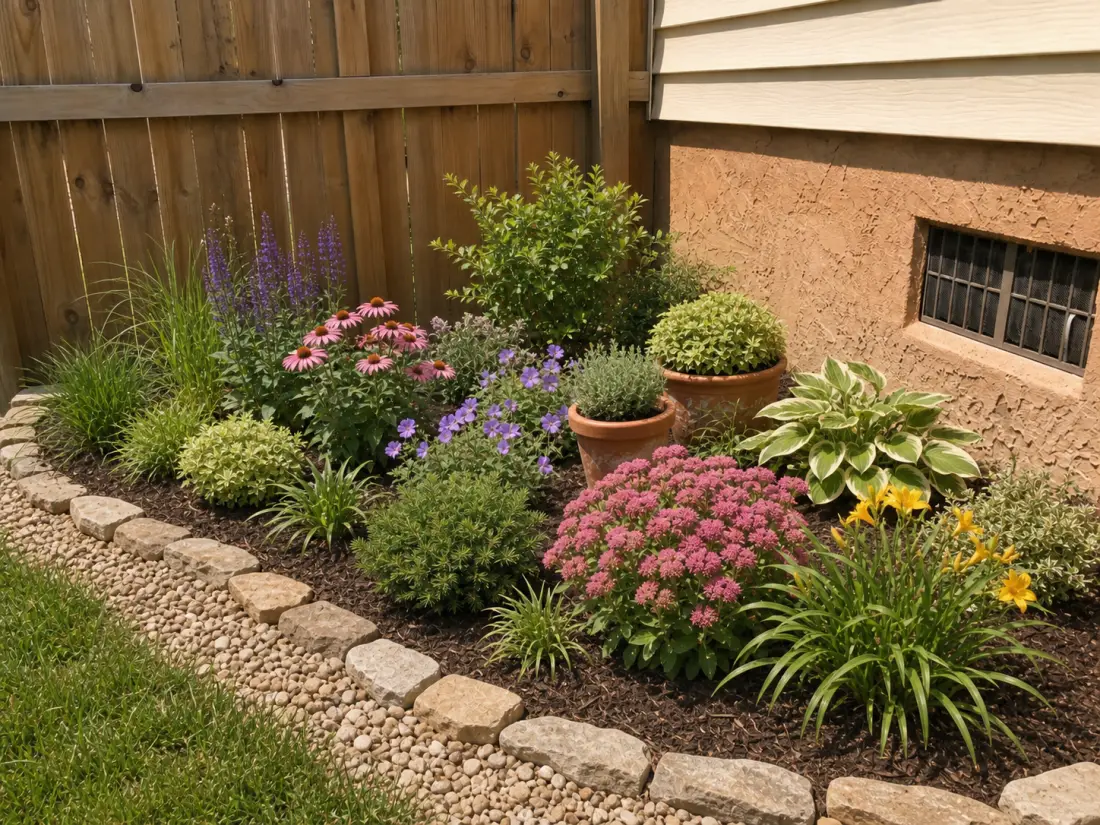
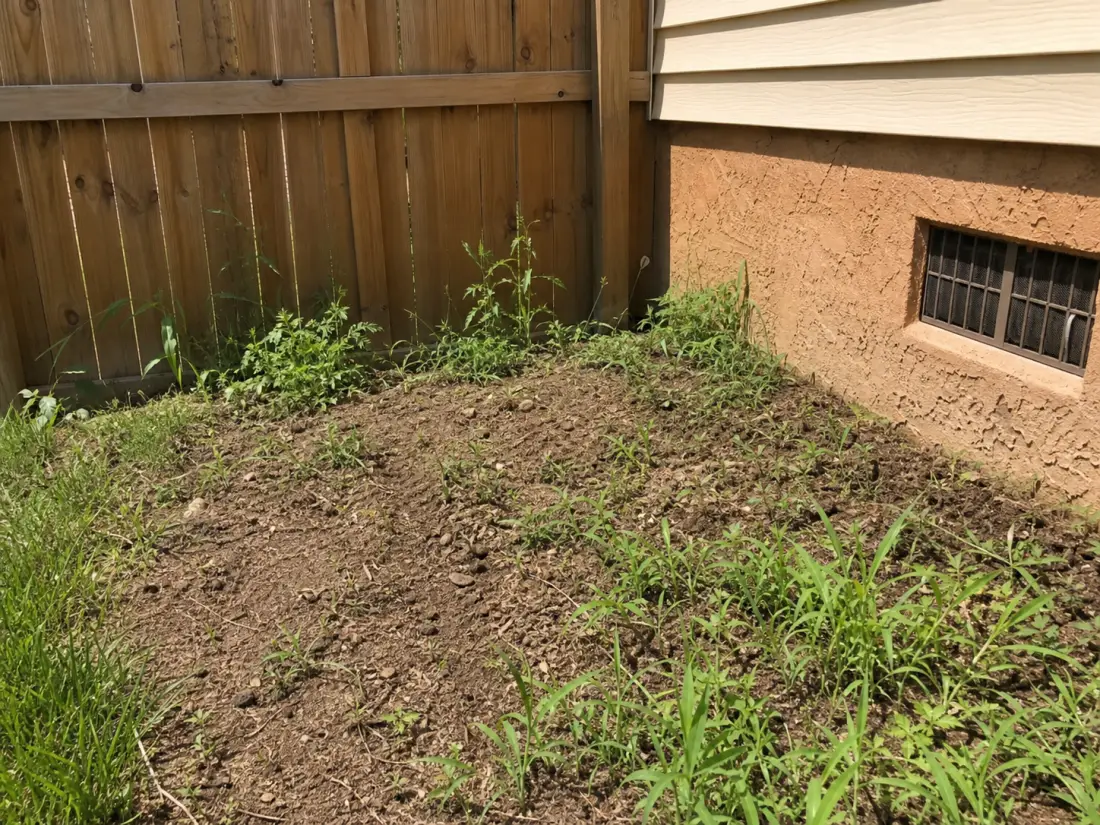 BeforeAfter
The brief
Every yard has one: the strip between the fence and the house where the lawn gave up years ago. Here it is a run of compacted bare soil along a cedar-tone fence, hard against a stucco foundation wall with a basement window. The fence shades it in the morning, the house shades it by late afternoon, and what volunteers is crabgrass. Nothing drains badly — the strip is simply too dry, too packed, and too shaded for turf. The owner wanted seasonal color and pollinator value without adding a weekly chore, in a bed that is on full view from the kitchen window.
The direction
- 1 Excavate 4–6 inches, fork the compacted subsoil, and blend in 2–3 inches of compost — nothing establishes in soil packed this hard, no matter how tough the plant list claims to be.
- 2 Grade the bed to fall away from the foundation at roughly a quarter inch per foot, and hold soil and mulch below the siding line and clear of the basement window well.
- 3 Edge the lawn side with fieldstone and leave a 6-to-8-inch gravel strip behind it — a mowing band wide enough for the mower wheel, so trimming the bed edge stops being a separate chore.
- 4 Plant in drifts by height: tall against the fence, mid-size through the center, low at the stone line, repeating four to five species rather than collecting one of each.
- 5 Set two terracotta pots with clipped boxwood where the bed meets the house corner, giving structure in the dry, shallow soil near the footing where little else thrives.
Suggested layout
Three-row drift bed with a mowing strip
Fence row
The back layer, planted 18–24 inches off the fence boards for airflow. This row carries the vertical bloom — spikes that read over everything in front of them.
Middle row
The color mass: coneflower, daylily, and sedum in overlapping drifts that close into a single tapestry by the second season.
Edge row
Low mounds under 12 inches — catmint and dwarf grasses — that soften the stone line without spilling onto the mowing strip.
Mowing strip
The gravel band between the stone edge and the lawn. The mower wheel rides it, so the grass edge stays crisp with zero string-trimming.
Planting & materials
Planting
- Purple coneflower (zones 3–8) and black-eyed Susan (zones 3–9) anchor the middle row: both take part sun, bloom June into September, and reseed politely rather than invasively.
- Salvia and catmint give the fence row its vertical spikes; shear both once after the first flush and they rebloom within weeks.
- Hosta and sedum handle the shadier, drier footing zone near the house corner, where the sun-lovers would sulk.
- Daylilies (zones 3–9) tolerate the compacted history of strips like this better than almost any other perennial, and their strappy foliage keeps the bed edge covered all season.
- Plant 12–18 inches on center so the drifts close within two seasons; open mulch between widely spaced plants is exactly where the weeds come back.
Materials
- Fieldstone or cobble edging set in a shallow sand bed flexes with freeze-thaw; plastic edging heaves out of strips like this within two winters.
- Run the gravel band 6–8 inches wide and about 2 inches deep over landscape fabric — wide enough for a mower wheel, narrow enough to rake clean in minutes.
- Shredded hardwood mulch at 2–3 inches deep, kept 3 inches off the stucco and below the basement window well, holds the moisture this dry strip never keeps on its own.
- Blend 2–3 inches of compost into the top 6 inches of soil at install and skip fertilizer the first year — most plants in this palette grow leggy and floppy in soil that is too rich.
Best for
Try this direction on your own yard.
The planner opens pre-set to garden bed, low-maintenance, native garden — upload a daylight photo and preview this direction on your own yard.
More examples
Backyard · Warm modern
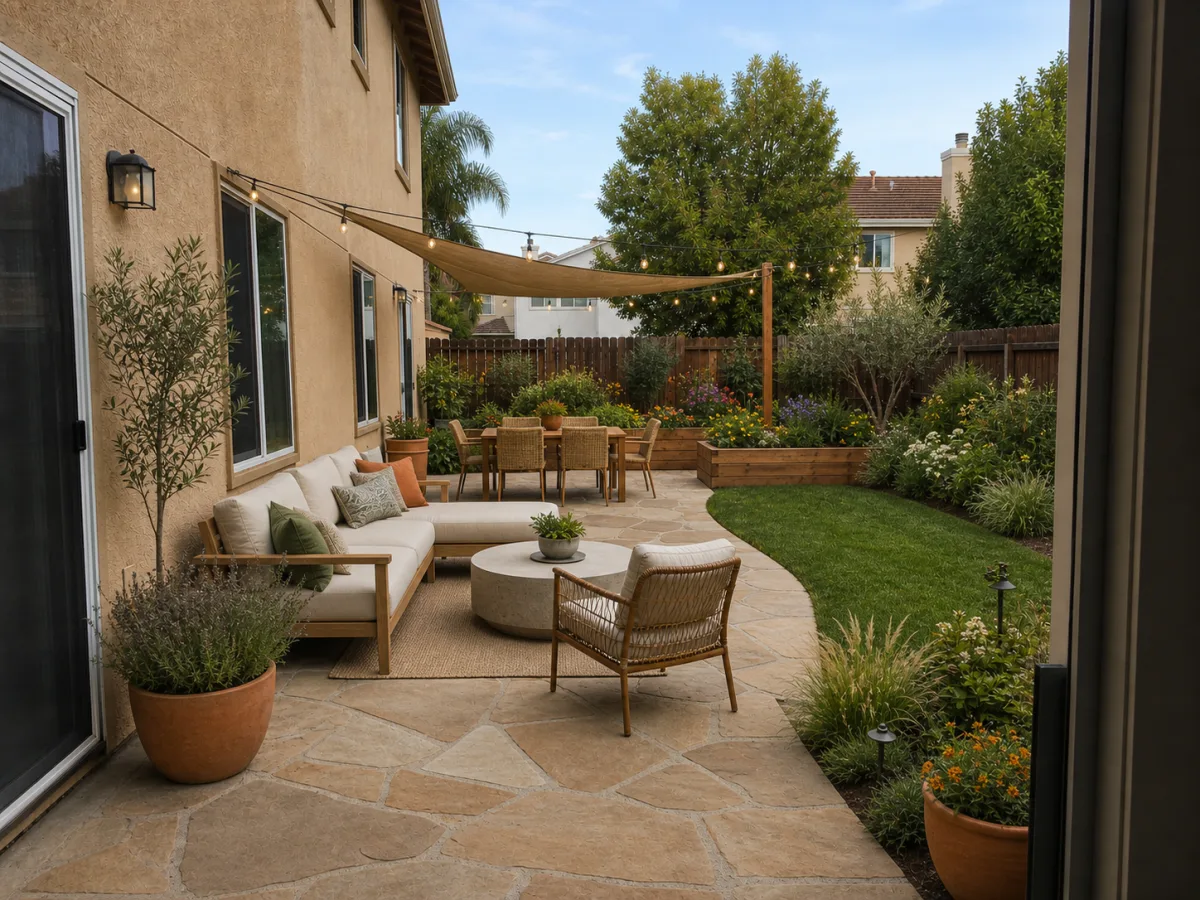
A Backyard That Works Like an Outdoor Room
A failing deck and thin lawn become a zoned outdoor room: flagstone patio, shade sail, raised cedar beds, and a lawn panel kept small on purpose.
Front yard · Cottage layered
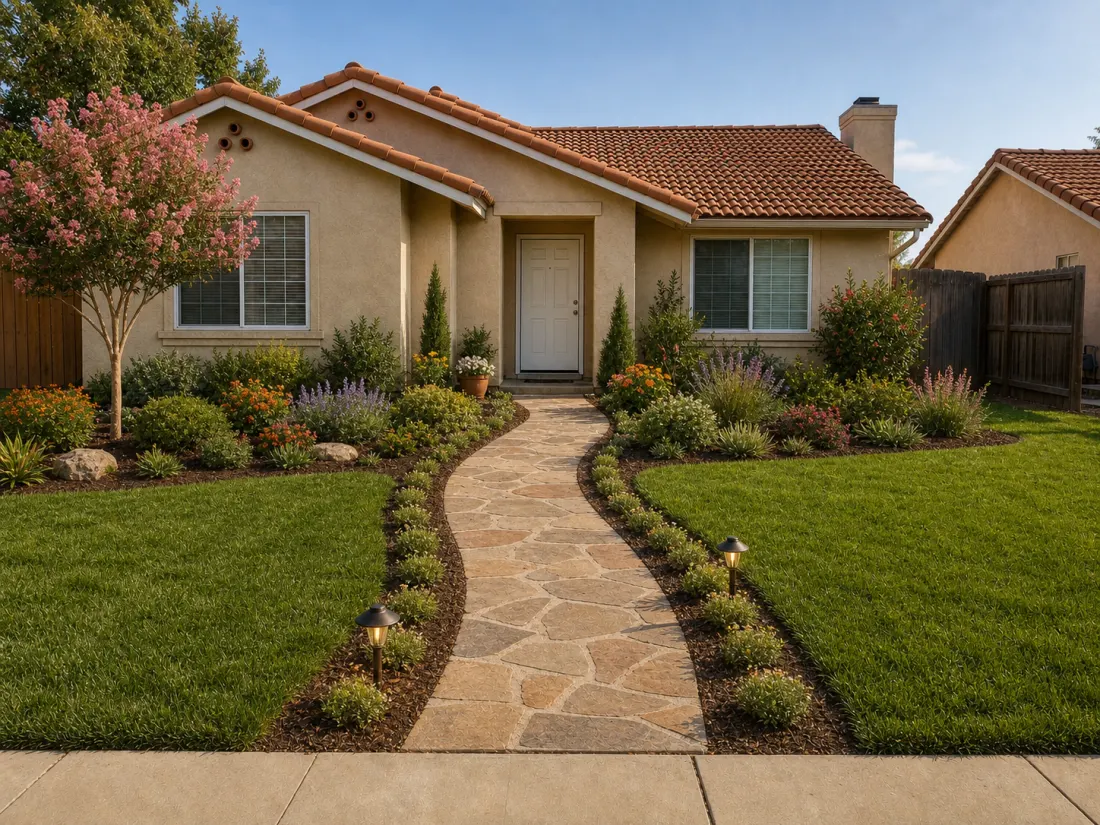
A Front Entry That Earns a Second Look
A builder-grade slab walk and patchy lawn become a curved flagstone entry with layered foundation beds, a flowering accent tree, and low path lighting.